Confirmed > 99% Lab-grade Peptides
Peptide Pureness & Quantitation Screening

Recap: What A Research-grade Coa Must Consist Of
Very couple of business study peptide vendors offer MS/MS information on regular COAs-- it is normally booked for pharmaceutical-grade products and progressed research study settings. However, some costs suppliers do supply it on request for vital sets. If series verification is vital for your study, this is the analysis to request. It separates the parts of an example based on their differential affinity for a stationary phase (column packing product) and a mobile stage (solvent system relocating through the column). Peptides, with long molecular sequences and varied conformations, present difficulties for structure verification and material resolution. BOC Sciences leverages high-resolution mass spectrometry, LC-MS/MS, and NMR to accurately assess molecular structures and offer extremely delicate quantitative support.
- HPLC separates a mixture into its individual elements based upon just how each particle communicates with a particularly developed column.
- As an examples of product-level context, contrast the anticipated masses for Retatrutide, BPC-157, and Semaglutide.
- Mass spectrometry validates molecular identity by inspecting whether the determined mass matches the expected peptide mass.
- For example, a pureness of 98% shows that 98% of the peptide material is the desired item, while the various other 2% may be undesired remnants of synthesis (such as incomplete series or amino acid removal variations).
Peptide Top Quality Screening System From Boc Sciences
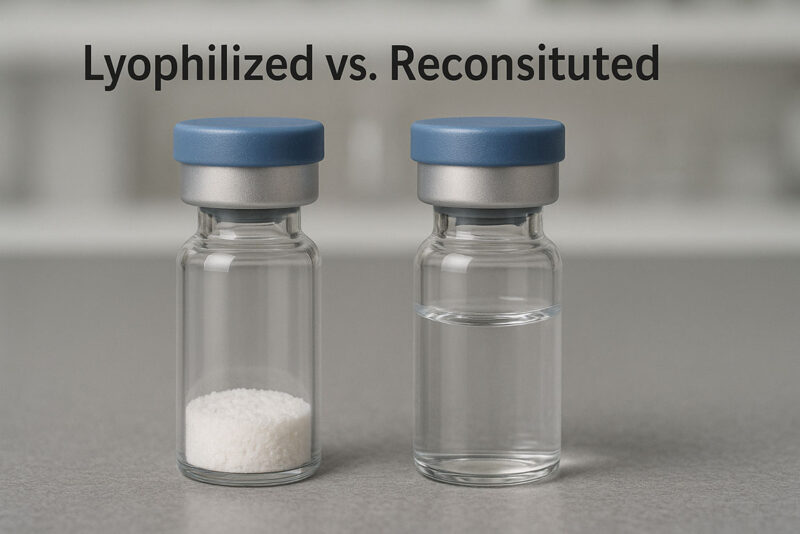
The table below links usual job objectives to useful logical panels and the type of decisions they assist sustain. Asparagine and glutamine deposits can go through deamidation, altering the peptide's fee and hydrophobicity. Deamidation is one factor storage space conditions matter, particularly Visit the website after a peptide has actually been reconstituted. Every item we bring is lab-tested and confirmed by third-party companions, so researchers recognize exactly what they're collaborating with. Peptides having methionine or cysteine residues are at risk to oxidation. Methionine can be oxidized to methionine sulfoxide; cysteine can create unwanted disulfide bonds or be oxidized to sulfinic or sulfonic acid by-products.